

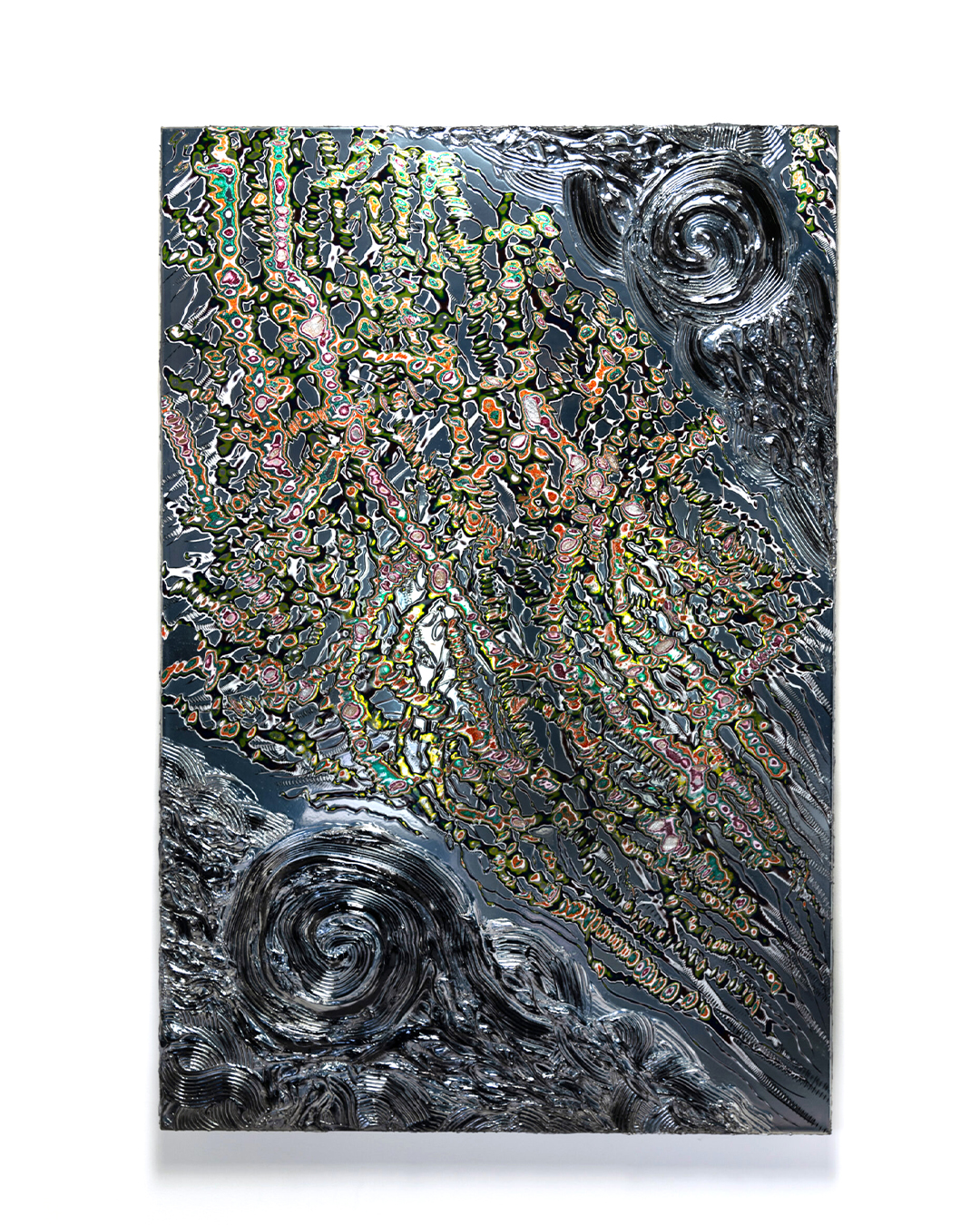
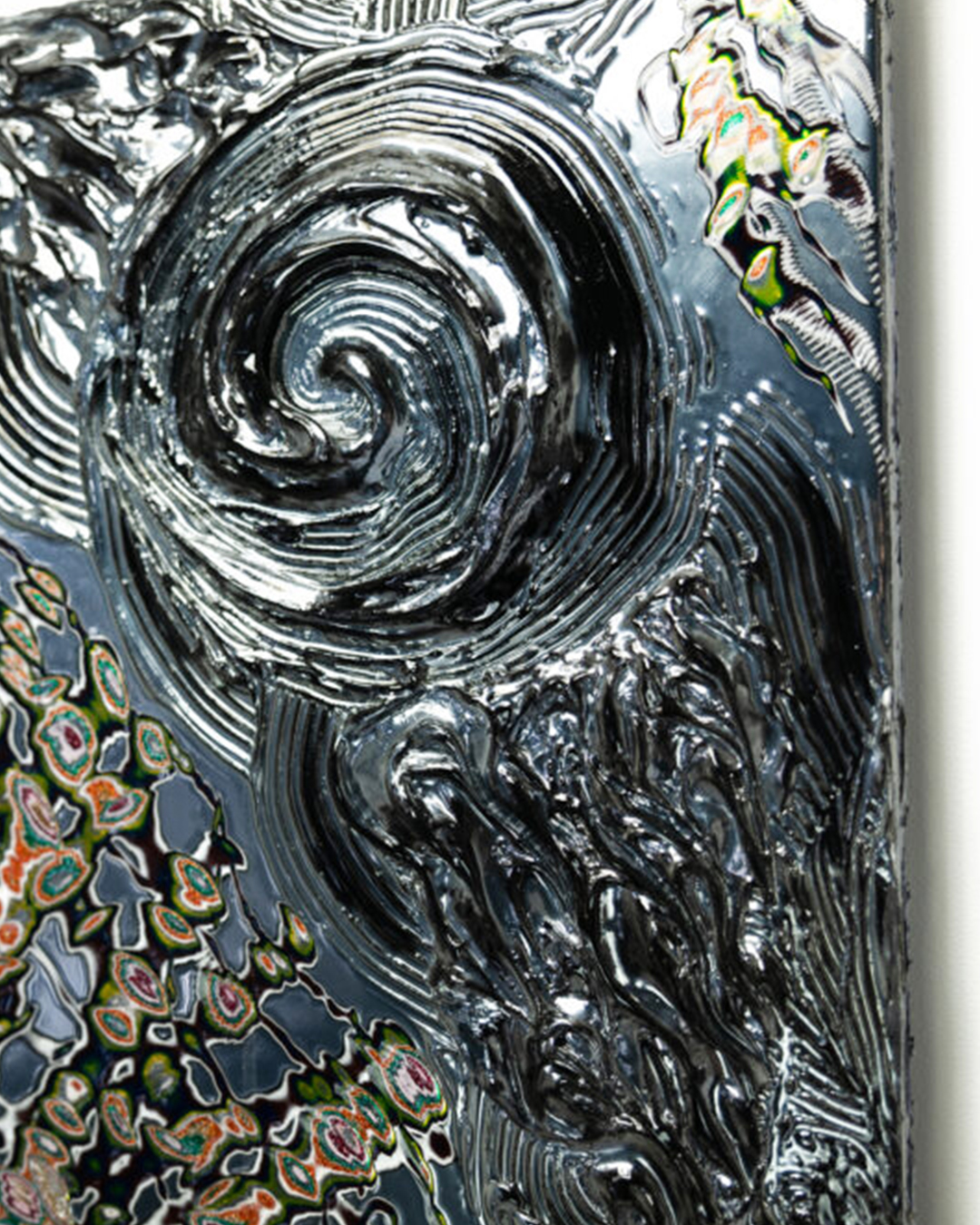
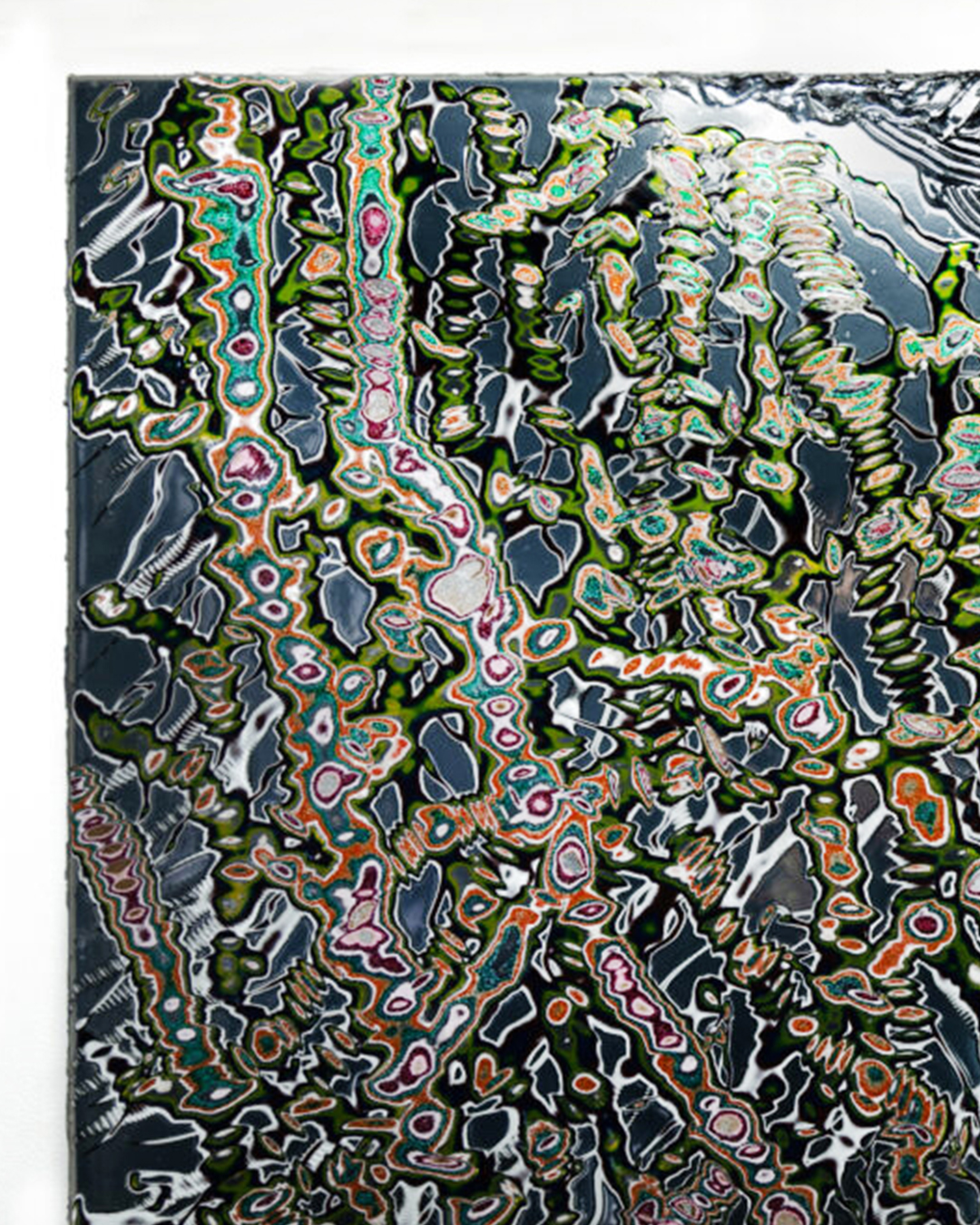
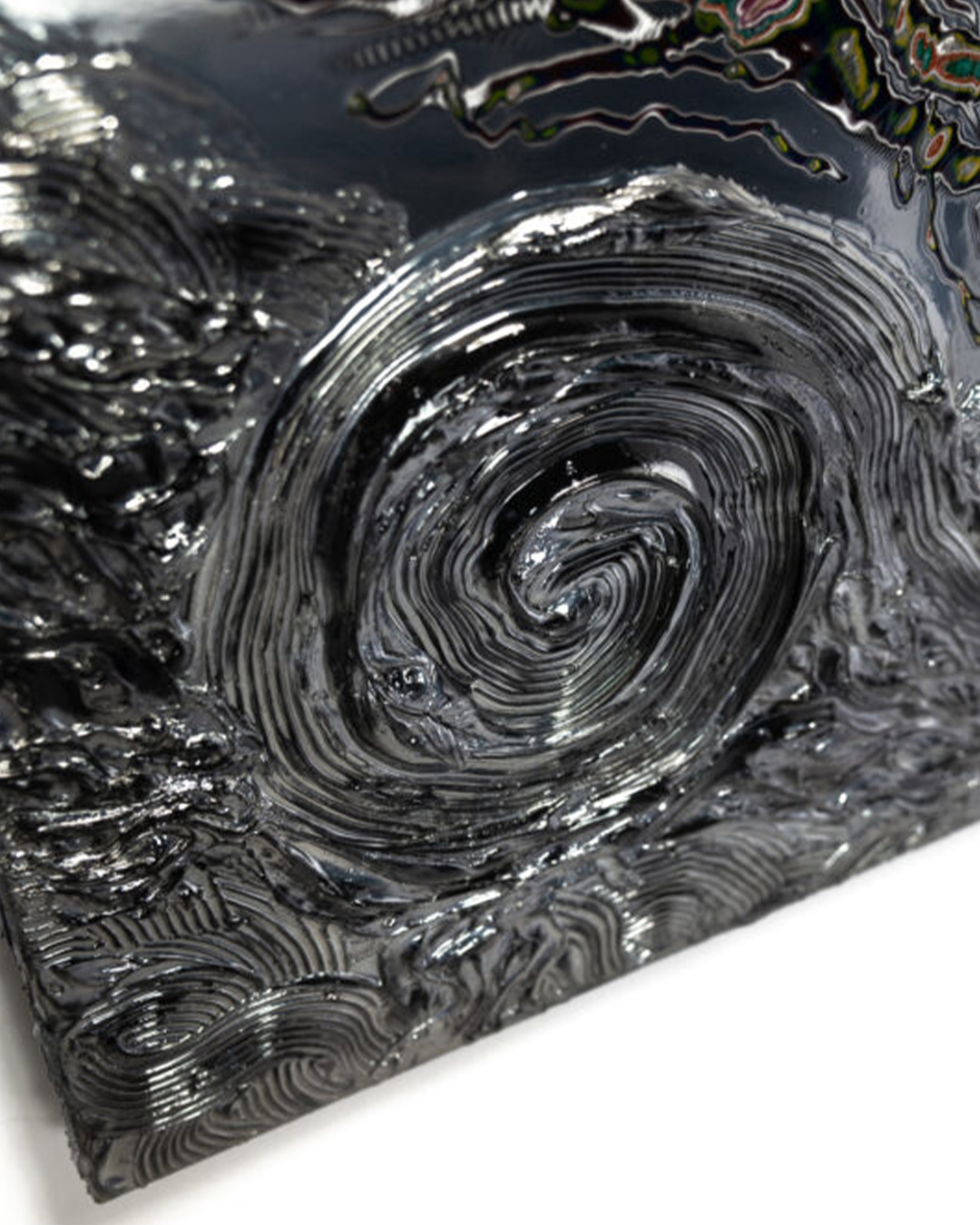
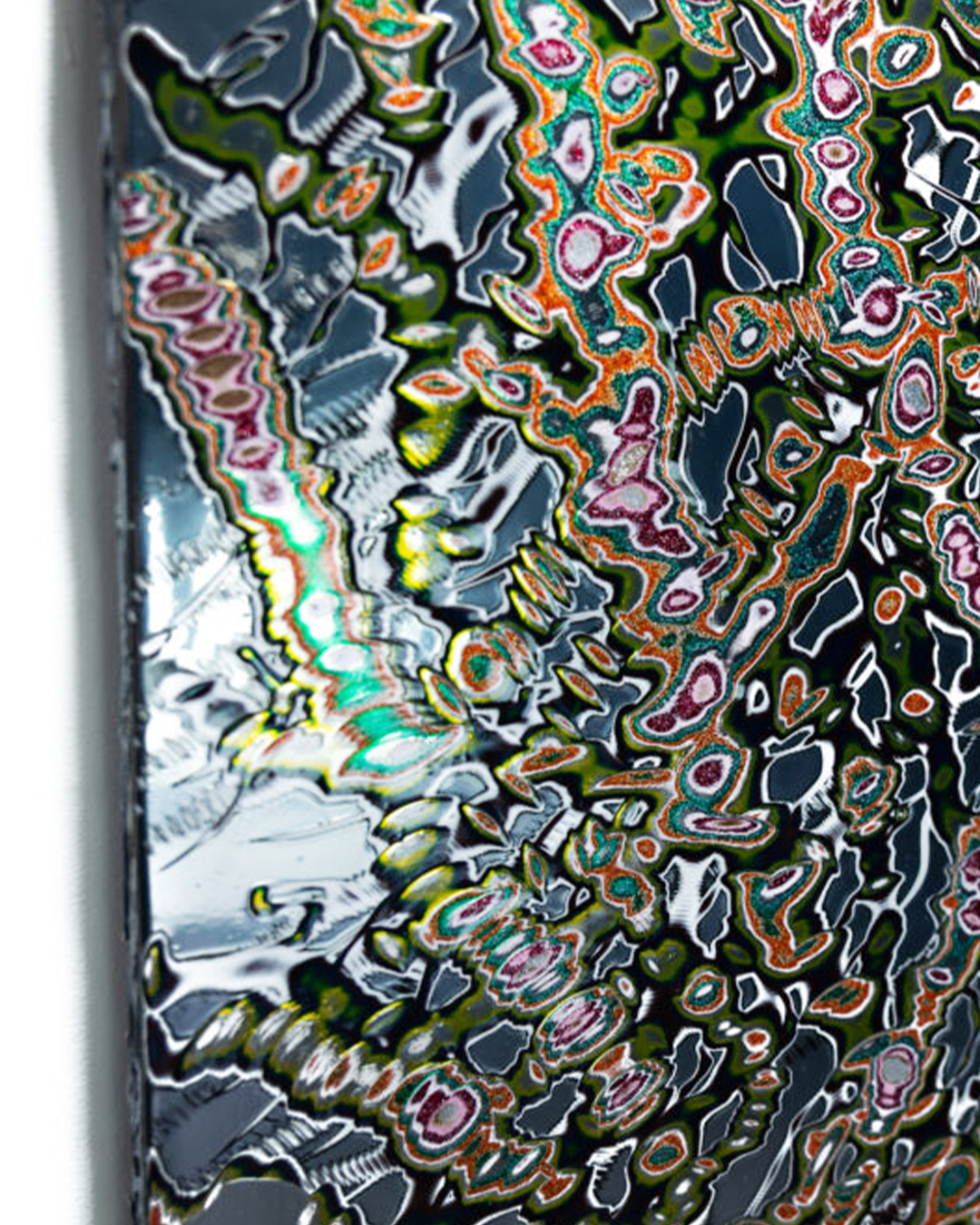
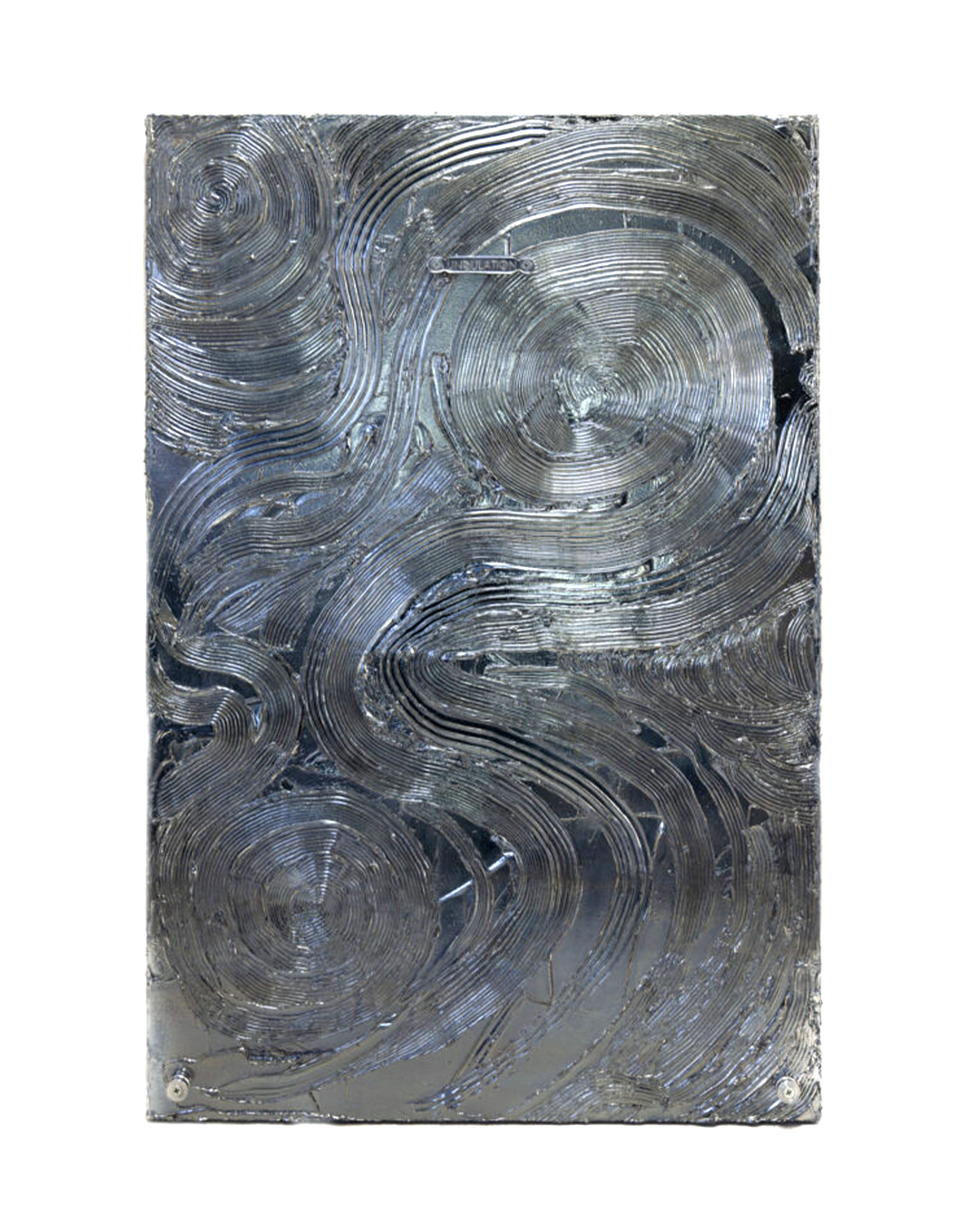
Dragon / M30号 – 組絵 / 銀龍
¥8,250,000 (tax included)
サイズ : M30号相当 / 900×600mm
材質 : 合板
重さ : 5.2kg
アーティストからの言葉
「2 Symbols ― 本作は日本の精神文化の深層に位置する龍の象徴性を、現代的な抽象表現へと昇華した試みである。とりわけ本作において重要なのは、単体のイメージとしての龍ではなく、「黒龍」と「銀龍」という二つの存在が対となり、組み絵として構成されている点にある。日本の神道において、龍は水や気の流れを司る存在であり、目に見えない自然の循環そのものの象徴とされる。黒龍は深淵や根源、すなわち大地や夜の静謐さを内包する存在であり、一方で銀龍は光や変容、天へと昇るエネルギーを象徴する。両者は対立ではなく補完関係にあり、陰陽のように互いを必要としながら世界の均衡を保っている。
本作が組み絵として提示されることの意味は、この「関係性」そのものを可視化する点にある。単体では成立し得ないエネルギーの循環、すなわち分かたれた二つが響き合うことで初めて立ち現れる全体性が、ここでは表現されている。鑑賞者は二つの作品を行き来することで、静と動、内と外、重力と浮力といった相反する要素の往還を体感することになるだろう。
また、両作品に流れる色彩の差異も極めて示唆的である。黒龍には、深く沈み込むような黒を基調に、重層的な色の揺らぎが内包されている。それは単なる暗さではなく、無数の可能性を孕んだ「未分化の状態」を想起させる。一方で銀龍には、光を反射するような軽やかさと流動性があり、色彩はより拡散的で、空間へと開かれている印象を与える。この対比は、物質と非物質、潜在と顕在といった二元的構造を示しながらも、決して分断的ではない。むしろ両者は連続しており、黒の深奥から銀の輝きが生まれ、銀の拡がりが再び黒へと還っていく循環のプロセスが暗示されている。
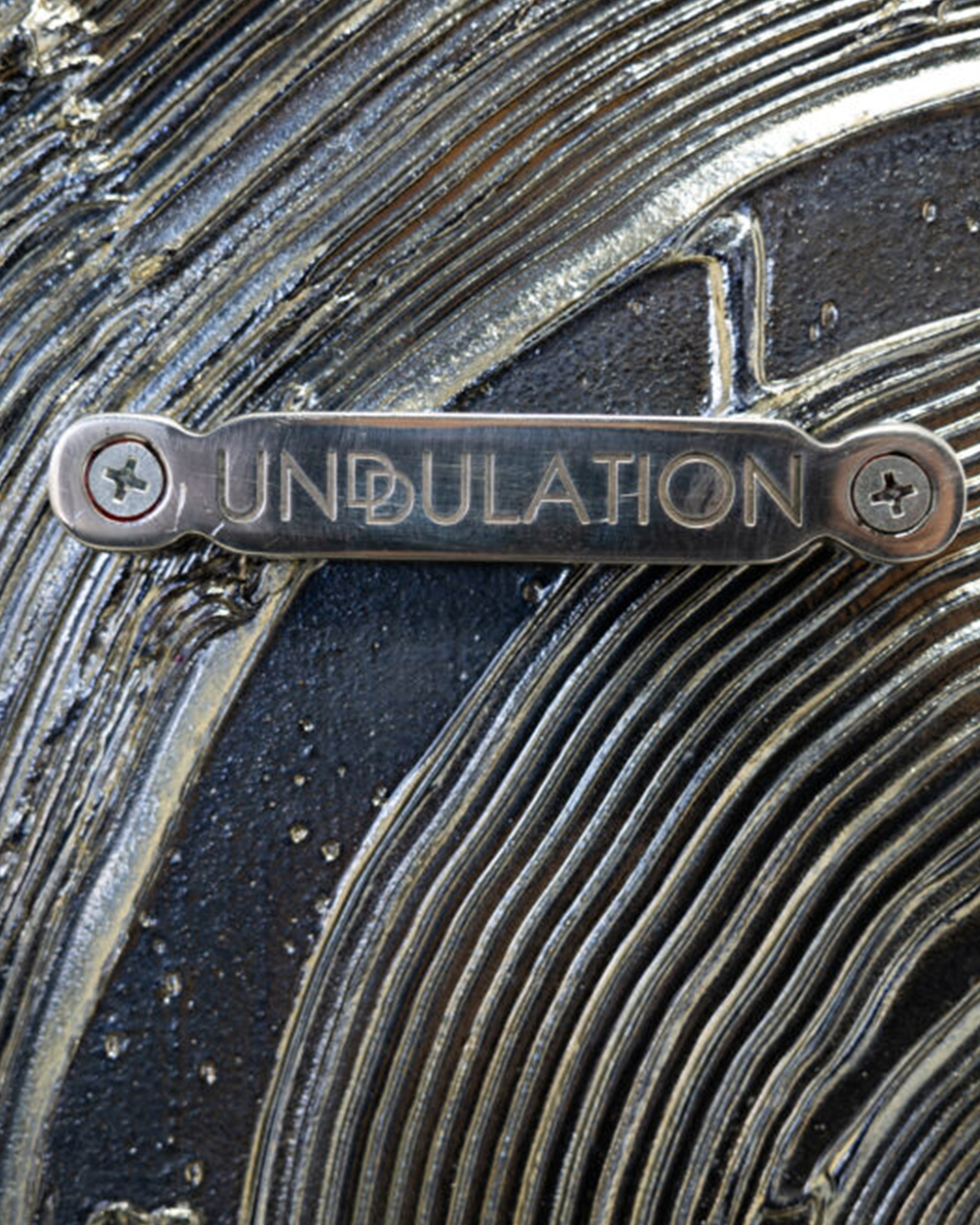
UNDULATIONという概念が示す「波動」や「揺らぎ」は、この作品において単なる視覚効果ではなく、存在そのものの在り方として提示されている。龍とは固定された形ではなく常に変化し続ける流れであり、その流れを二つの相として捉えた本作は、日本的自然観の現代的解釈として位置づけることができるだろう。」
作品名:Dragon 組絵 / 黒龍 & 銀龍
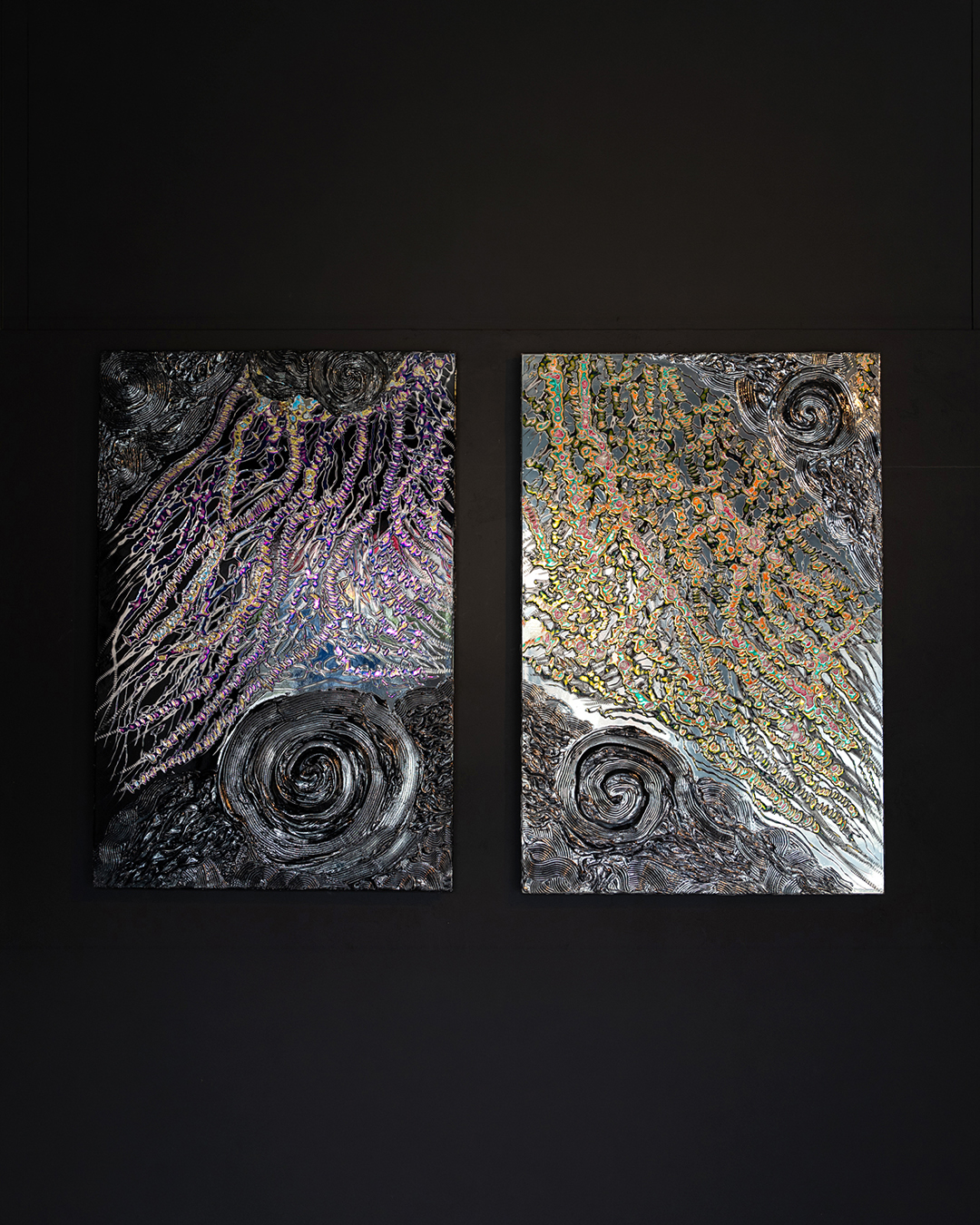
Title: DRAGON – Black Dragon & Silver Dragon / The two greatest Dragon Symbol
Size: Approx. M30 (900×600mm)
Material: Plywood
Weight: 5.2kg
Artist’s Statement
“2 Symbols — This work is an attempt to sublimate the symbolic presence of the dragon, deeply rooted in Japanese spiritual culture, into a contemporary abstract expression. What is essential here is not the dragon as a singular image, but the pairing of two entities—‘Black Dragon’ and ‘Silver Dragon’—composed as a unified diptych.
In Shinto, the dragon is regarded as a force governing the flow of water and energy, a manifestation of the invisible cycles of nature itself. The Black Dragon embodies depth and origin—the stillness of earth and night—while the Silver Dragon represents light, transformation, and the ascending energy that reaches toward the heavens. These two are not in opposition, but in a complementary relationship, sustaining balance much like yin and yang.
The significance of presenting this work as a diptych lies in making this very “relationship” visible. It expresses a circulation of energy that cannot exist in isolation—only through the resonance between two separated forms does a greater wholeness emerge. As the viewer moves between the two works, they experience a continual passage between stillness and motion, interior and exterior, gravity and lift.
The contrast in color between the two is also deeply suggestive. The Black Dragon is grounded in a profound darkness, layered with subtle variations of color. It is not mere darkness, but evokes an “undifferentiated state” filled with infinite potential. In contrast, the Silver Dragon possesses a lightness and fluidity that reflects illumination; its colors are more expansive, opening outward into space.
This contrast speaks to dual structures such as material and immaterial, latent and manifest—yet it is never divisive. Rather, the two exist in continuity: from the depths of black, the radiance of silver is born, and from the expansion of silver, it returns once more to black.
The concept of UNDULATION—wave, fluctuation—is not merely a visual effect in this work, but a statement on the nature of existence itself. The dragon is not a fixed form, but a continuously shifting flow. By capturing this flow through two aspects, this work can be seen as a contemporary interpretation of the Japanese view of nature.”