

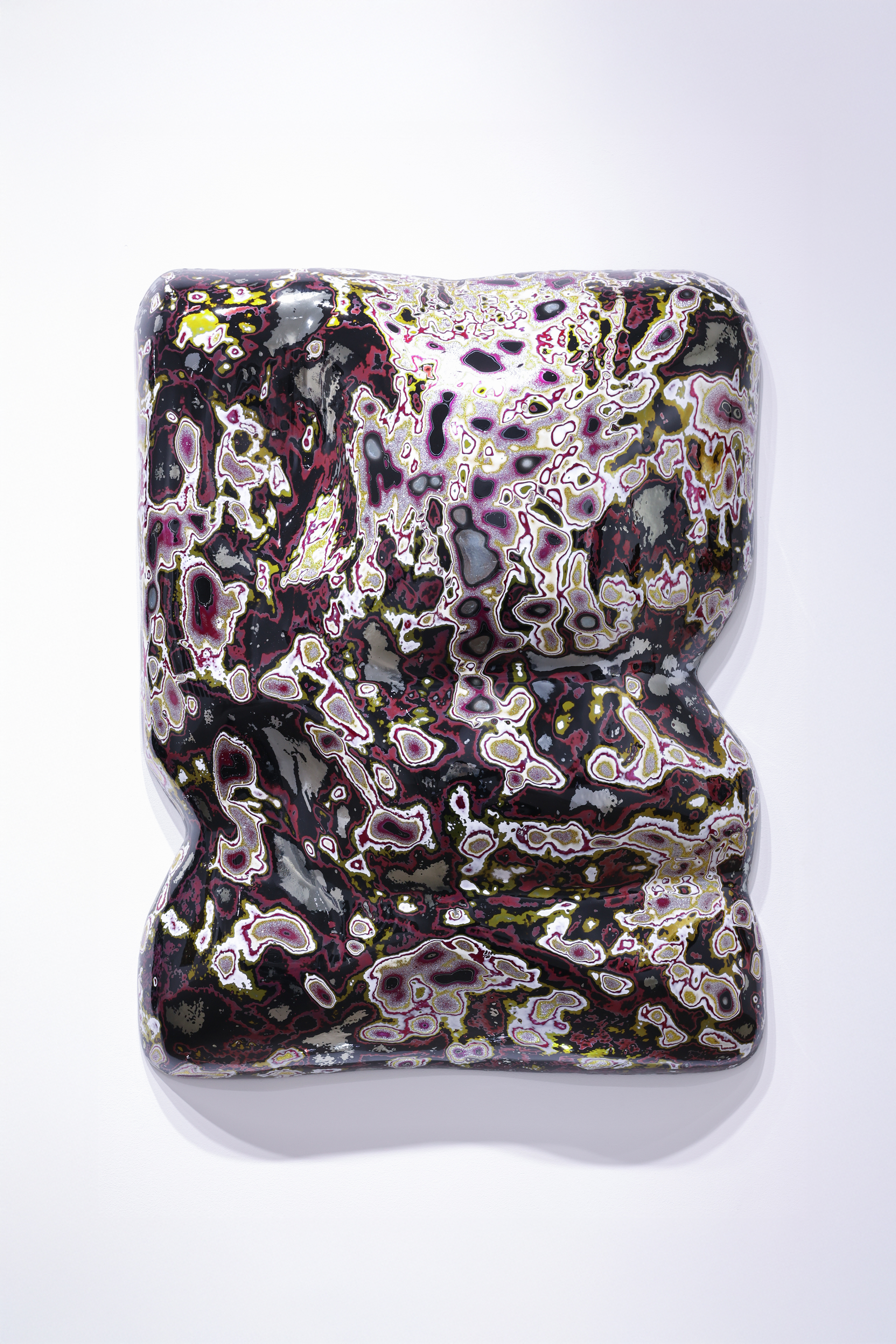
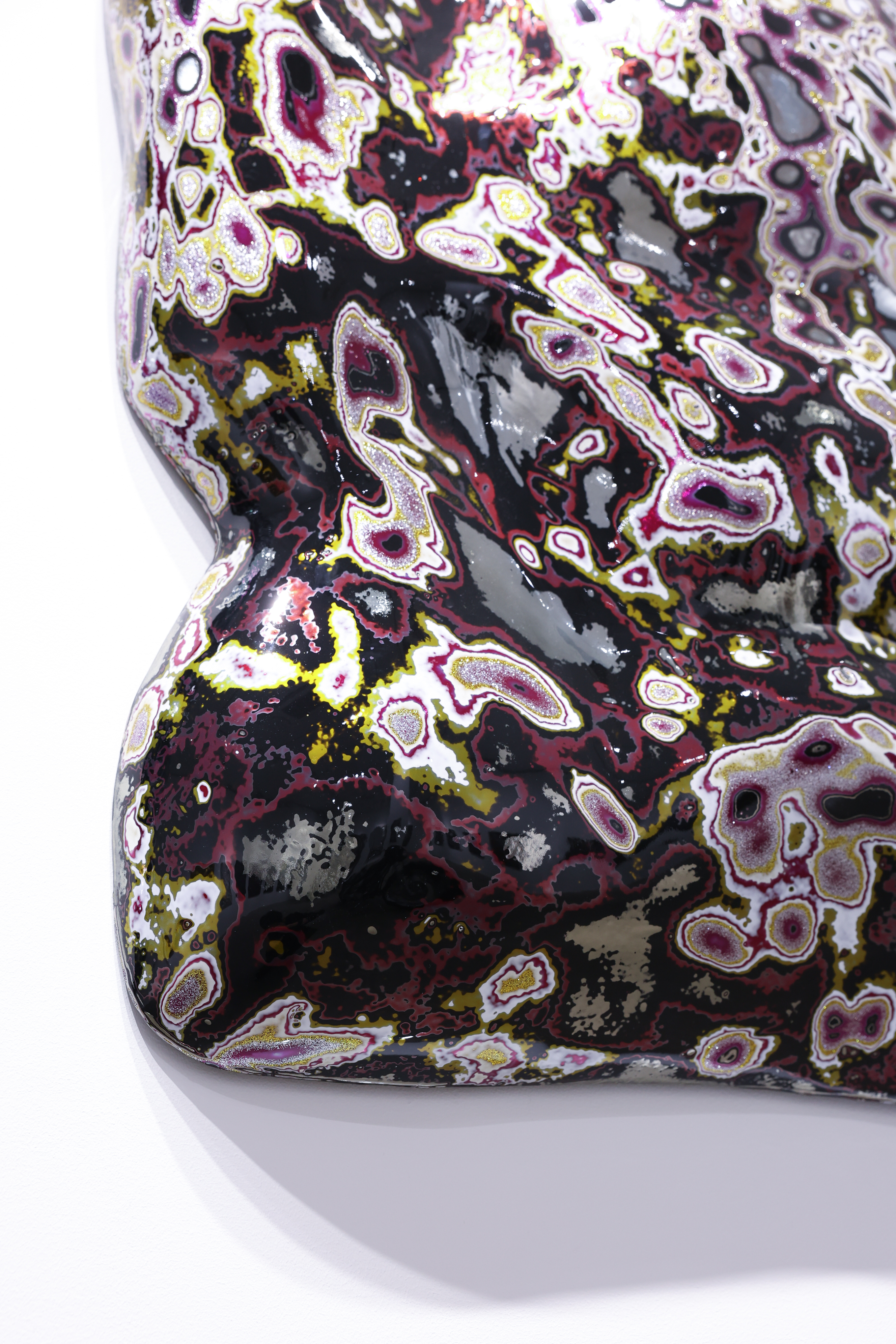
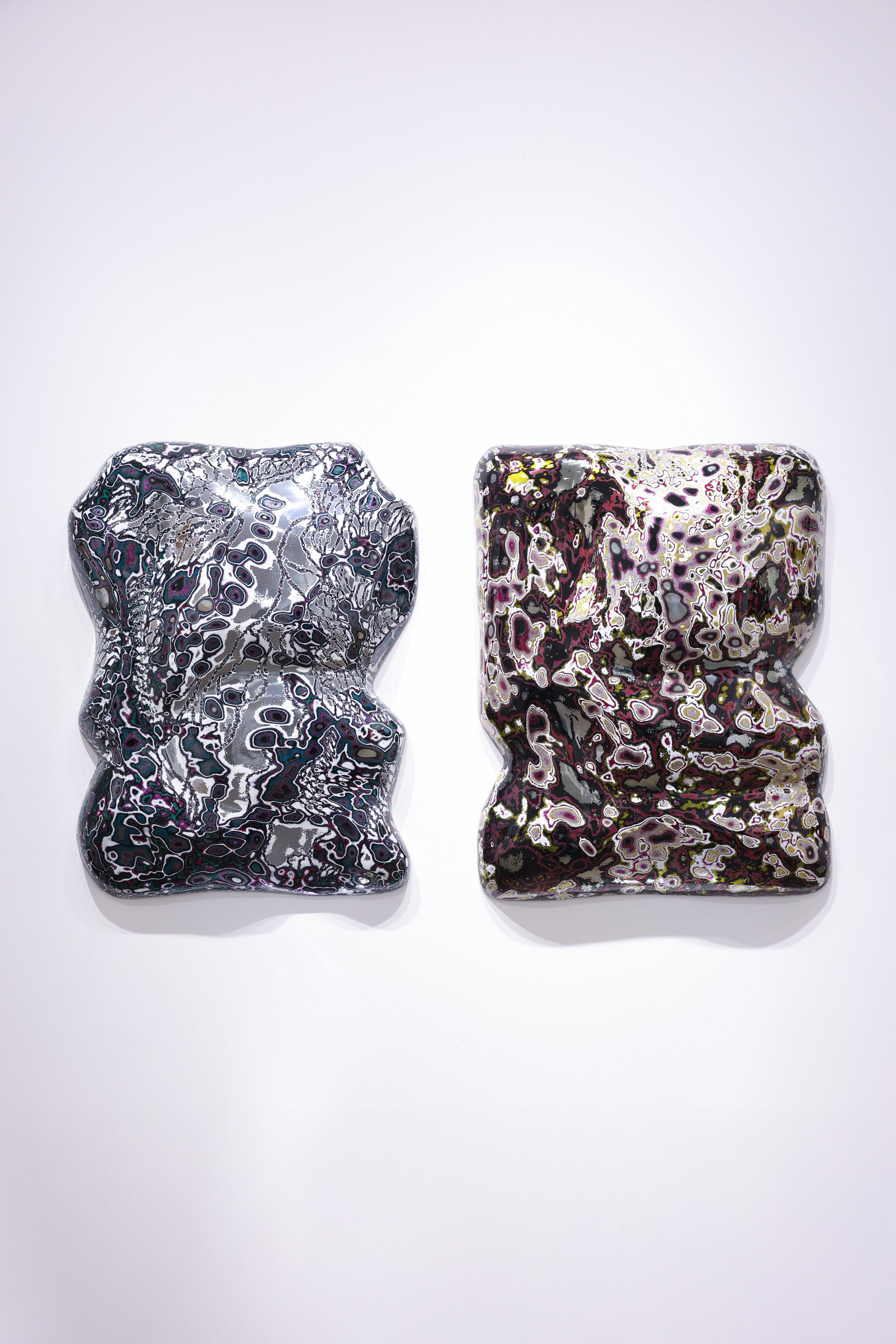
HAZE / FRP F30号相当
¥6,600,000 (tax incl.)
作品タイトル:UNDULATION HAZE / 異形は光を孕む
サイズ:F30号相当 / 1040×780mm
重さ:8.5kg
素材:FRP製オリジナルキャンバス、ウレタン塗装、特殊シルバー塗装
Title: UNDULATION HAZE / The Otherworldly Form Holds Light Within
Size: Approx. F30 / 1040×780mm
Weight: 8.5kg
Material: Original FRP canvas, Urethane coating, Special silver paint
This work begins with a reconsideration of the relationship between support and painting.
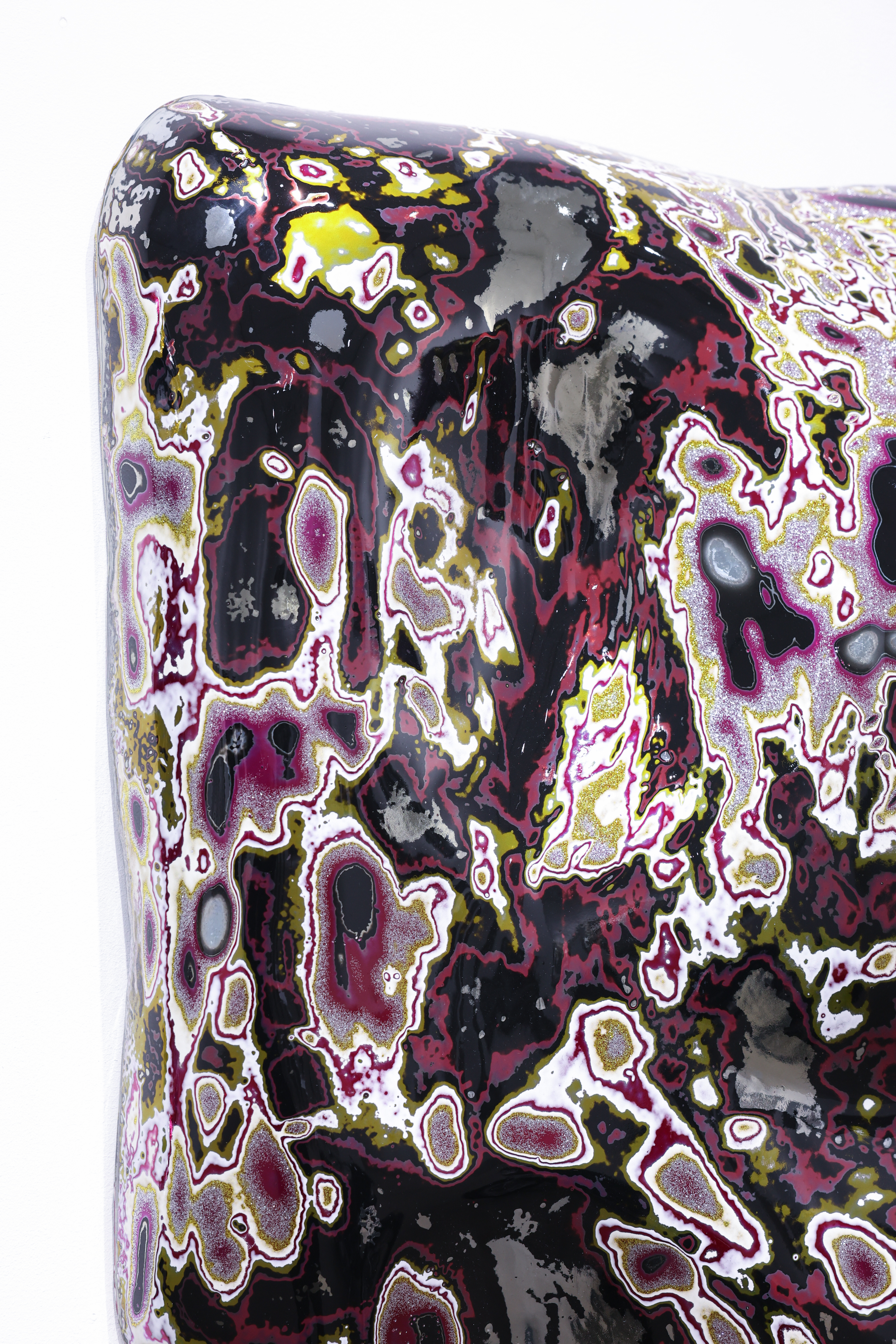
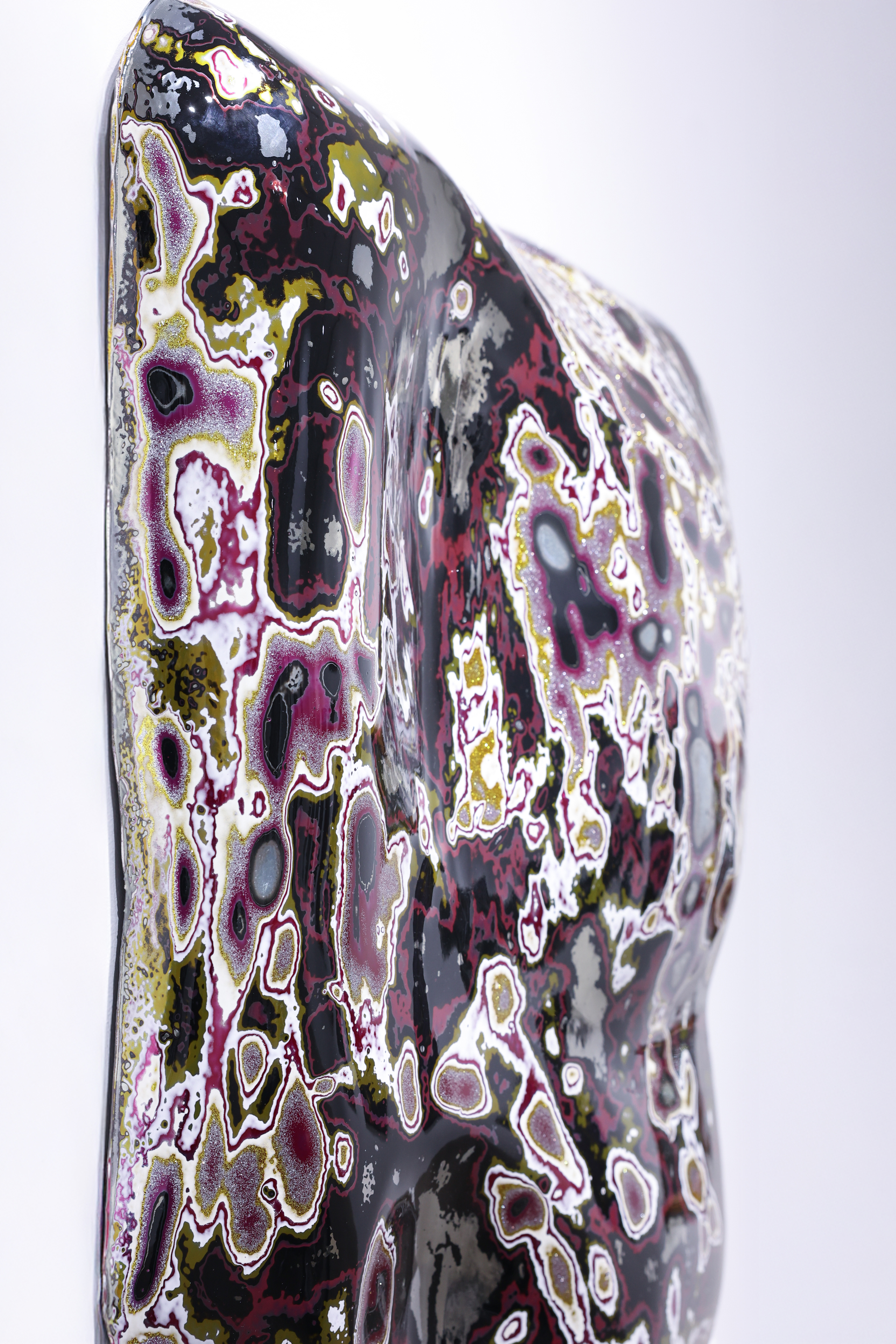
The canvas, formed in FRP, departs from the premise of flatness and instead emerges as a structural body whose form itself functions within space. Its distorted contours and asymmetry are not conceived as external features, but as conditions designed to receive and articulate the behavior of light.
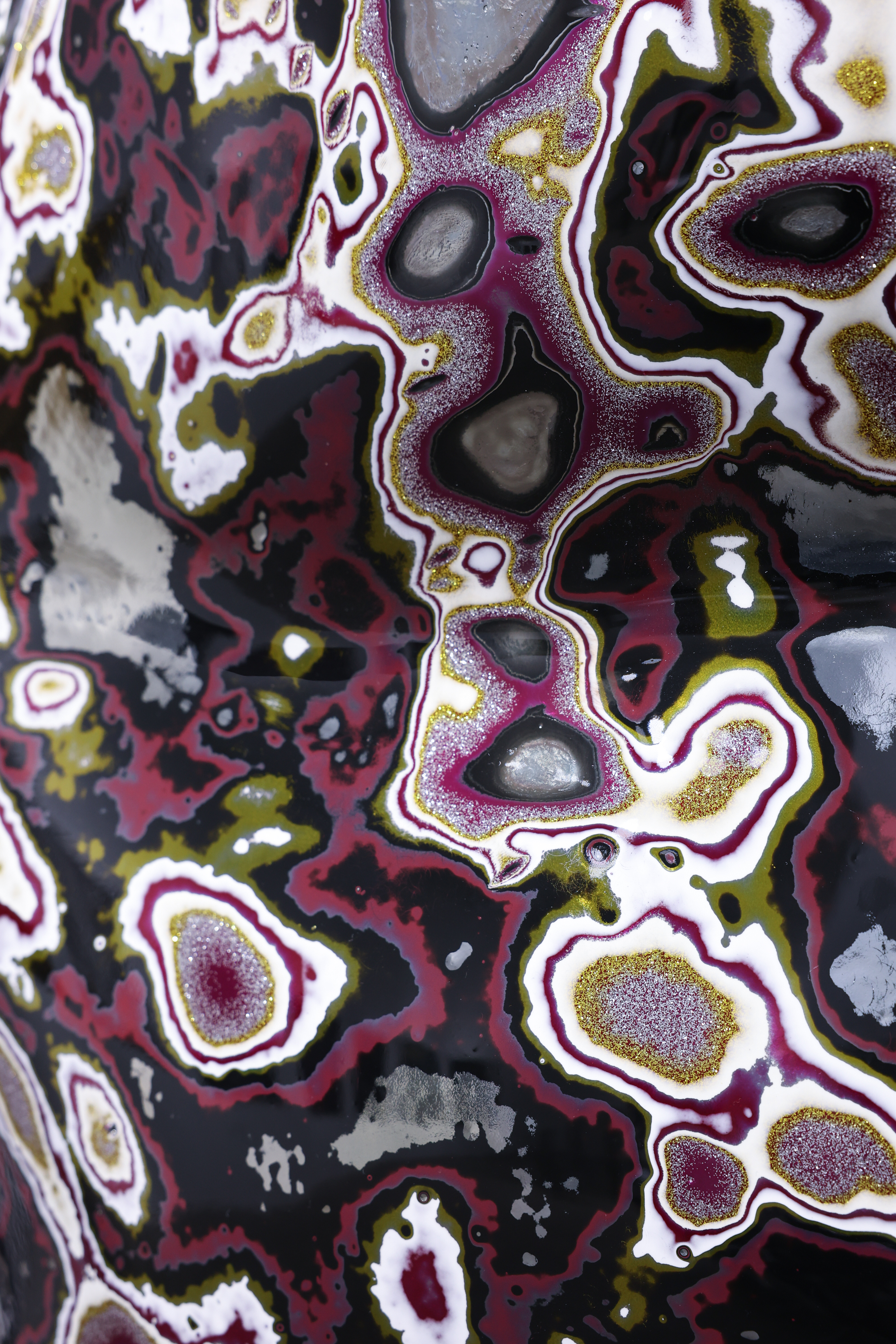
Upon its surface lies a silver ground, built through multiple processes, over which translucent layers of color are applied. The precisely refined silver stratum draws light inward, while the color does not remain on the surface; rather, it rises through repeated reflection and transmission within the layered depth. As a result, color does not exist as a fixed attribute, but appears as a phenomenon that continually shifts in response to light conditions and the viewer’s position.
This structure operates only through the interdependent relationship between the form of the support, the precision of the ground, and the multiple layers of coating. Remove any one of these elements, and the image as it appears cannot come into being. The work thus exists as a singular system in which material, technique, and form are inseparably bound.
The sense of time and memory that underlies the UNDULATION series manifests here as a material accumulation within this multilayered structure. Each successive layer of coating embodies an invisible passage of time, its depth perceived as visual dimensionality. At the same time, a quiet reverence—akin to the sensibility found in Shinto—toward that which transcends form is subtly contained within the anomalous form and the fluctuation of light.
What this work ultimately proposes is a reconsideration of beauty long supported by “perfect form.” Rather than relying on uniformity or symmetry, it is through distortion and deviation, in conjunction with light, that an alternative order and beauty emerge. The irregular form is not a departure, but a necessary structure through which light is conceived, carried, and made visible.
In this work, where light, material, and form continuously interact, what appears is not a fixed image, but a presence in constant transformation within space. In doing so, it extends the framework of painting, while simultaneously posing a quiet yet profound question to the very criteria by which we perceive beauty.